History
From František Janeček to the legendary Pérák and Kývačka: a Czech motorcycle story since 1929. Today, the next chapter is ready for the road.
A legacy that keeps moving.
From František Janeček to the legendary Pérák and Kývačka: a Czech motorcycle story since 1929. Today, the next chapter is ready for the road.
1929
The JAWA name combines Janeček and Wanderer.
1933
Production and assembly expand at Týnec nad Sázavou.
1946
The legendary JAWA 250 Pérák.
1954
The arrival of the Kývačka.
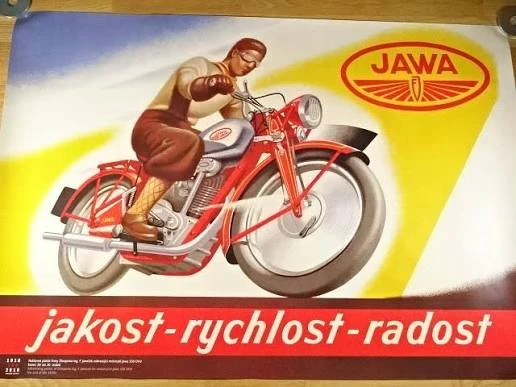
From first sketch to open road.
1929 — The beginning
JAWA was born from the names Janeček and Wanderer. Entrepreneur František Janeček launched the brand with the 500 OHV, opening a chapter that would make Czech motorcycles familiar far beyond their home country.
The classics
Pre-war lightweight motorcycles broadened JAWA’s audience. After the Second World War came the celebrated Pérák and, in the 1950s, the Kývačka. Through exports and everyday use, these bikes became an enduring part of European motorcycle culture.
Twin-cylinder heritage
The 634 and 638 series carried the road-going two-stroke twin tradition into later decades. The name Twin also recalls the JAWA 350 type 638 Twin Sport.
A new era: 650 and 660
The JAWA 650 Classic arrived in 2004 with a Rotax engine; the 660 Sportard followed in 2011 with a Minarelli power unit, later joined by the 660 Vintage. These motorcycles kept development moving beyond the familiar 350 models.
The road to 2026
The modern range expanded through the 350 OHC, 650 OHC and 400 Geeny. In 2026 JAWA presented the new 730 Twin together with its more exclusive sibling, JAWA 1000. The two models share a design language created by Czech designer Jan Hrbek and close ties to manufacturing in Týnec nad Sázavou.
JAWA Moto – JAWA historical milestones
JAWA historical milestones ↗